Conservation tree work that keeps trees where they can be kept
Some trees are worth keeping for their landscape value, wildlife, age or history. Conservation tree work starts from retention: the aim is to manage a tree so that it stays, rather than removing it when a lighter approach would do. It suits sensitive sites, protected trees and owners who want a careful approach.
A retention-first approach
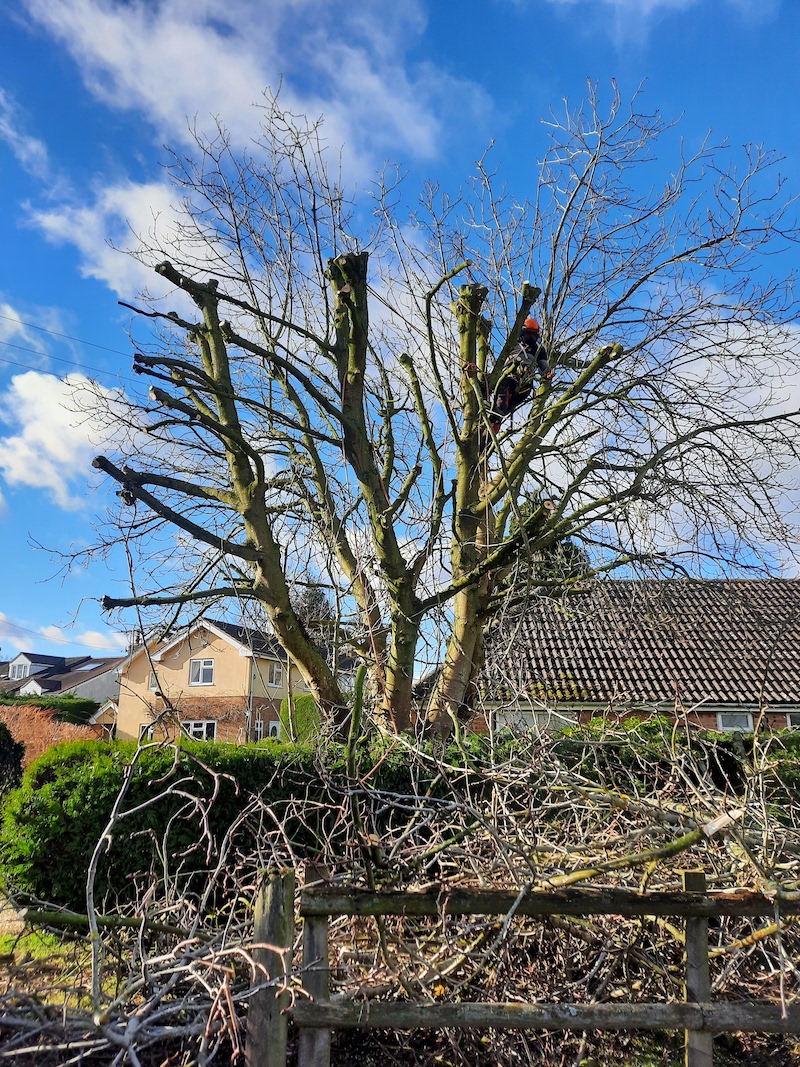
We start by asking what can be kept. That means looking at the tree's health and structure, the site around it, and the effect any proposed work would have. Where a tree can be managed to stay in place, we explain how. Where it cannot, because it is structurally unsafe or failing, we explain why and set out the options, including those that would retain as much of the tree as possible.
This approach takes longer than simply taking a tree down, but it often gives a better result for the landscape and for the people who value the tree.
When this approach matters
- Trees covered by a tree preservation order or standing within a conservation area
- Trees near watercourses, ponds or other wildlife habitat
- Mature or historic trees that shape the character of a property or landscape
- Trees on sites being developed, where retained trees must be protected during works
Permissions and wildlife
Some work to trees needs permission before it starts, and some trees and animals are protected by law. We flag these issues during the assessment, but we do not give legal advice and we cannot promise any approval. For a protected tree, check with your local planning authority before you agree any work. If bats, nesting birds or other protected species may be affected, a suitable ecological assessment is needed before work begins.
Pruning is often part of this approach. Our tree pruning service describes how cuts are chosen to keep a tree healthy and in place. Before any decision, a tree survey can record the tree's condition in writing, which is useful when permissions are being sought.
What an assessment and proposal involve
The assessment considers the tree's health, its structure, the condition of its roots and soil where visible, and the consequences of each option. The proposal explains the reasons behind the recommended work, the alternatives considered and the level of change the tree would experience. Where work cannot avoid some harm, we say so plainly.
Practical considerations
- Root protection: machinery, materials and soil compaction are kept away from the root zone where the tree needs it most.
- Timing: seasonal restrictions and wildlife considerations can limit when work is possible.
- Access and surroundings: routes for equipment are planned around the tree, paths and any protected features.
- Site finish: the ground, cut material and any protective measures are left as described in the proposal.
What is included and what needs confirming
Usually included
- An assessment of the tree and its surroundings
- A written explanation of the options and reasons
- Careful work to the agreed method
Requires confirmation
- Any permission or consent needed before work
- Ecological surveys by a qualified adviser
- Protective fencing or ground protection
- Monitoring visits after work
Questions about conservation tree work
Can you confirm that a tree can be worked on without permission?
No. We can tell you what we notice on site, but whether permission is needed is a matter for your local planning authority or a qualified adviser. Please check before any work is agreed.
Will you keep a tree that is structurally unsafe?
Retention is the aim wherever it is safe and reasonable. A tree that presents a hazard may still need work, and we will explain the risk, the options and the reasons for the recommendation.
Do you carry out ecological surveys?
If a survey by a qualified ecologist is needed, we will tell you so before work, and we can work alongside the adviser you appoint.
Talk through a tree you want to keep
Tell us where the tree is, what matters about it and any permissions you already hold.