Stump removal and what to expect afterwards
A stump left after a tree is cut down can regrow, get in the way of mowing and planting, and become a trip hazard. This page explains the stump removal method we offer, how access affects the work and what the ground looks like once it is finished.
Why a stump is worth dealing with
A stump keeps its own root system alive, and some species send up new shoots from it for years. It can also rot slowly, attracting insects and fungi that may spread into nearby planting. Leaving it in place can block a lawn, a border or a planned building project, and an old stump can catch a mower blade or a foot.
Some people leave stumps deliberately, for wildlife or as garden features. If that is your aim, tell us so the work is planned around it.
The method we offer
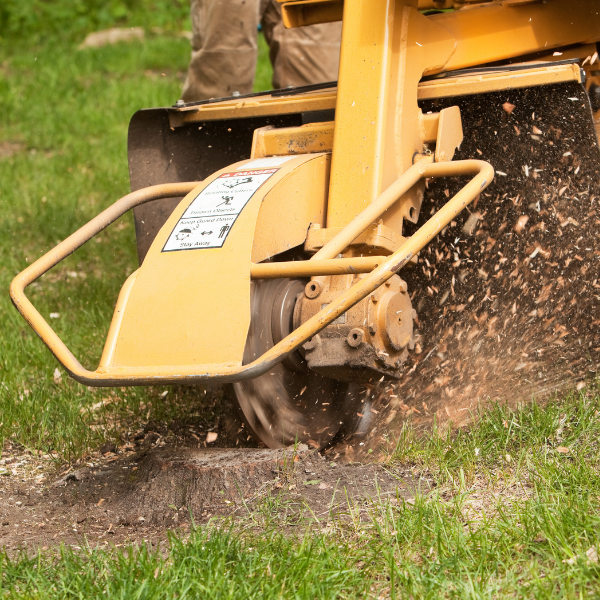
Grinding cuts the stump and some of the surrounding root into wood chips, down to a set depth below ground level. Excavation lifts more of the root system out, but it disturbs a larger area of ground. Each approach leaves a different result, so the proposal should say which one is used and what depth or area it covers.
If the stump follows a tree removal, the tree removal service explains how the tree is taken down and what happens to the wood. The stump is then handled as a separate operation.
Access and site conditions
- Machine access: the equipment has to reach the stump. Gate width, slopes and overhead space all matter.
- Ground conditions: after heavy rain, soft ground can limit when the work is possible and how the surface is left.
- Buried services: before any digging, we ask you to confirm the location of buried pipes, cables and drains. Excavation near them is not carried out until they are located.
- Nearby features: paths, patios, fences and raised beds need protection or a planned route around them.
Aftercare and the finished ground
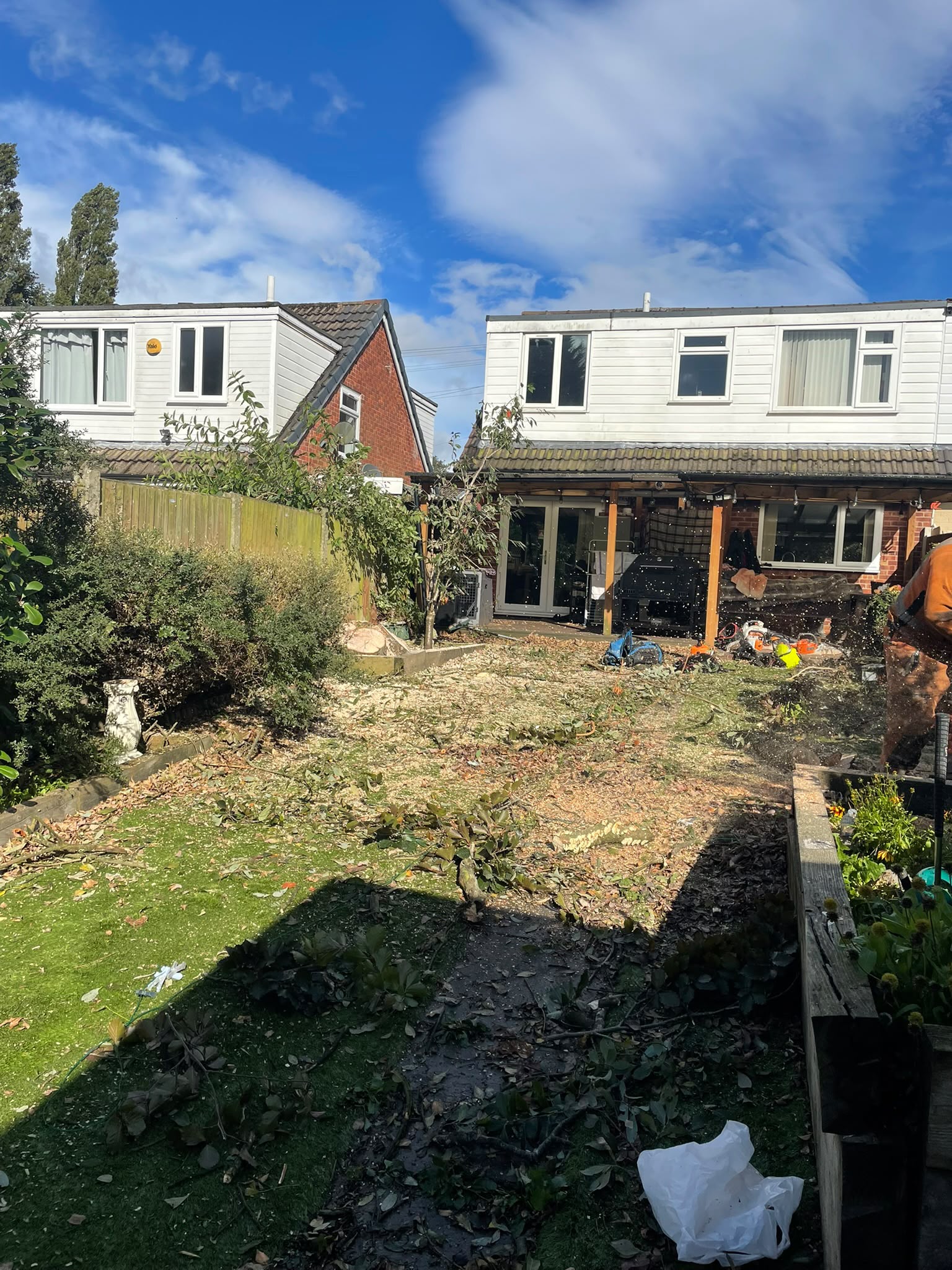
Once the stump is removed or ground down, the resulting hole or area is levelled. Wood chippings may be left in place, spread or removed, and the ground may need topsoil before it is seeded or turfed.
Some stumps send up new shoots after treatment. Where regrowth appears, we will explain what it means and whether further work is needed.
Planting on the same spot
Removing a stump does not guarantee that a new tree will thrive in the same place. Remaining roots, compacted soil and any disease in the old tree can all affect a new planting. If you plan to replant, let us know your plans before the stump work is scheduled. We will tell you what we can and cannot say about the site.
What is included and what needs confirming
Usually included
- An assessment of the stump and its access
- Stump work using the method stated in the proposal
- Clearing of the work area to the agreed finish
Requires confirmation
- Whether grinding, excavation or both are available
- Topsoil, seeding or turfing
- Follow-up treatment for regrowth
- Disposal of wood chippings and roots
Questions about stump removal
Will the stump grow back?
Some stumps resprout, particularly certain species. The method and aftercare reduce that risk but cannot remove it entirely. If you know the species, tell us and we will say what to expect.
Will all the roots be removed?
Not necessarily. Grinding and excavation remove different amounts of root. We will explain what the chosen method achieves on your site rather than promise complete root removal.
Can I plant a new tree straight after stump removal?
It depends on the site and the state of the soil. We can talk through the factors once we have seen the ground.
Clear the stump and the ground
Tell us where the stump is, how large it is and how you can get equipment to it.