
Tree removal planned around the site
Tree removal is the controlled taking down of a tree that is dead, dying, damaged or no longer suitable for its position. It suits homeowners, landowners and businesses who need a tree gone safely, with the work planned around access, neighbouring property and the finished ground.
When removal may be needed
A tree may need to come down when its structure is failing, when storm or disease damage makes it a hazard, or when it is growing where pruning cannot resolve the problem. A tree that is still sound but poorly placed is often better managed by pruning, so removal is usually the option considered once simpler measures have been ruled out.
Removal can also form part of planning for building work, or be needed when a dead tree threatens a boundary. In each case, the reason for removal shapes how the work is planned.
What an assessment and proposal involve
Before work starts, we look at the tree itself, the ground around its base, and everything above, below and beside it. That includes buildings, fences, paths, parked vehicles, overhead cables and neighbouring trees. The aim is to understand how the tree will come down safely and where it will land.
The proposal should explain the method, the equipment expected on site, the areas that will be affected during work and what the finished site will look like.
Sectional dismantling after assessment
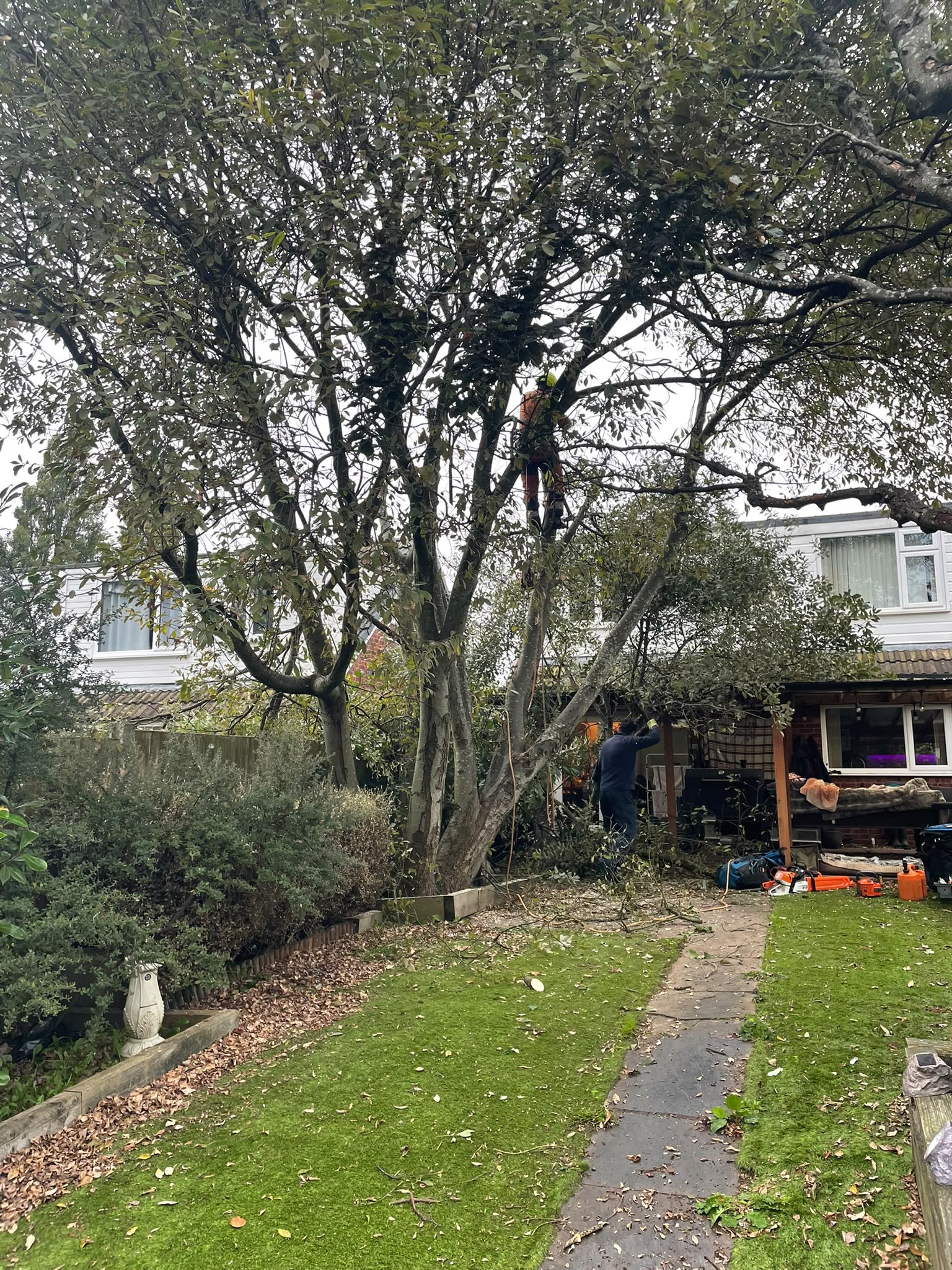
Where a tree cannot be lowered in one piece, it is often taken down in sections. The crown is removed first, then the trunk is cut into lengths and lowered under control, usually with ropes. Sectional dismantling suits trees that stand close to buildings, fences or other trees, or where there is no clear space for a single fall.
When there is room to bring the whole tree down in one controlled fall, a different approach may be possible. Our tree felling service explains how directional felling differs and when it suits a site. The assessment decides which method is safer for your tree.
Practical considerations on the day
- Access: the width of gates, the route for equipment, where vehicles can park and whether any ground needs protecting.
- Nearby structures: roofs, greenhouses, fences, conservatories and boundary walls all affect how a tree is taken down. Work close to overhead power or telecoms cables must be arranged with the relevant operator.
- Neighbours and footpaths: where a public path or a neighbour's property lies within reach of the work, we will discuss how it is protected while work is carried out.
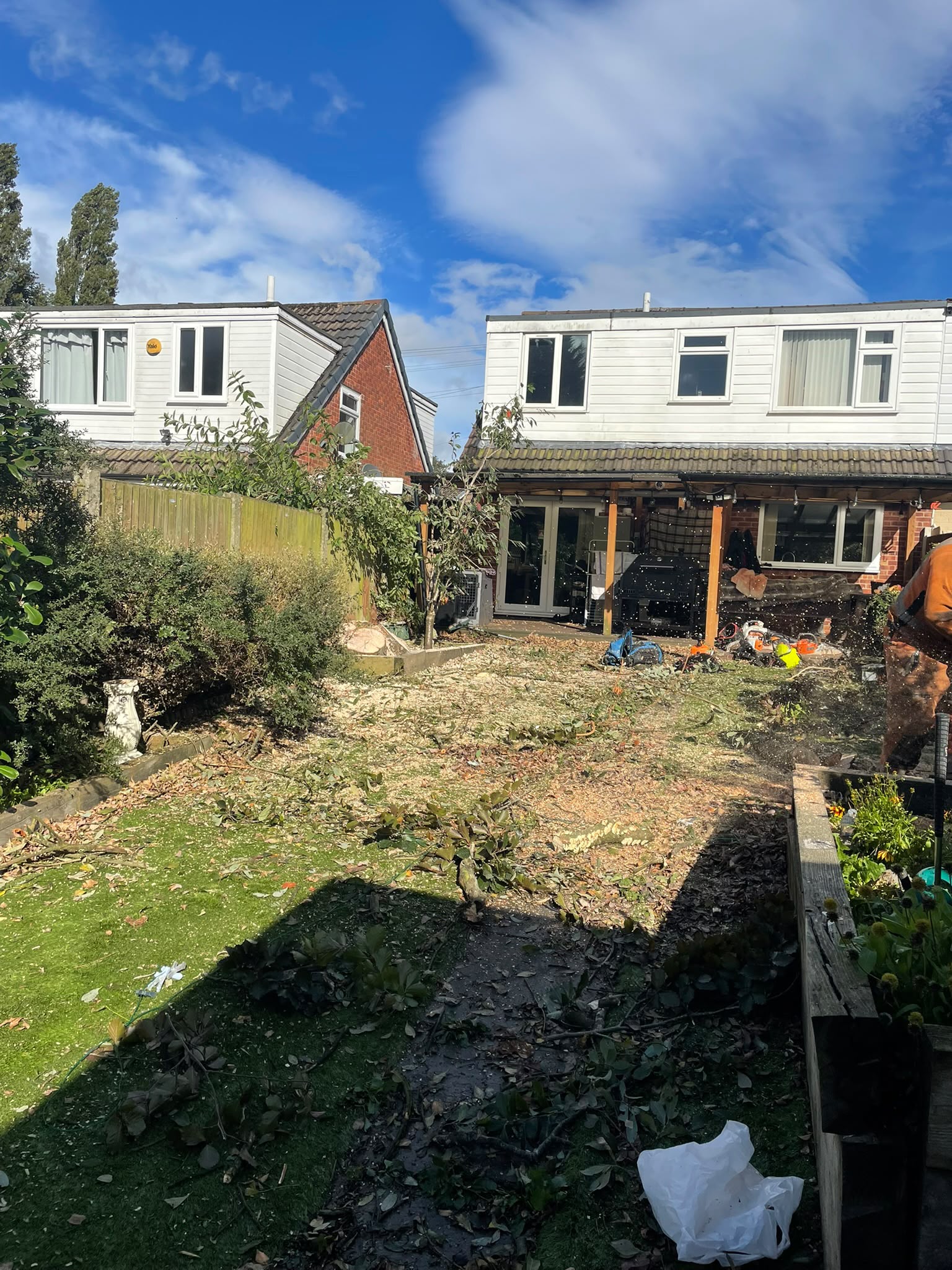
- Site finish: the wood, brash and debris can be removed, chipped or left in a stated place.
If you also want the stump dealt with after the tree is down, our stump removal service explains the method offered, the access it needs and what the ground looks like afterwards.
What is included and what needs confirming
Usually included
- An assessment of the tree and its surroundings on site
- Safe working methods and protection of the work area
- Felling or dismantling of the tree as described in the proposal
Requires confirmation
- Stump treatment or removal, which is a separate service
- Disposal, chipping or stacking of wood
- Repair of lawns or surfaces marked by machinery
- Permissions where the tree is protected
- Parking, access restrictions or road closures
Questions about tree removal
Do I need permission before removing a tree?
It depends on the tree and where it stands. Some trees are protected, and work in a conservation area may need notice to the local council before it starts. We can tell you what we notice on site, but whether permission is needed is a question for your local planning authority. Check before you agree the work.
Can a tree always be removed in one piece?
No. Some trees can be brought down in one controlled fall, but many need to be taken down in sections. The method depends on space, the tree's shape and what is nearby.
Will the site be left clean?
What is removed from the site and what is left in place is agreed before work begins, and it is set out in the proposal.
Get a clear plan for your tree
Tell us where the tree stands and what is around it, and we will reply to arrange the next step.