Tree pruning for growth, clearance and structure
Pruning manages how a tree grows. It keeps branches clear of buildings, paths and boundaries, removes dead or damaged wood, and shapes the crown so the tree keeps a sound structure over the years. It suits homeowners and businesses with trees that need regular attention.
What pruning is for
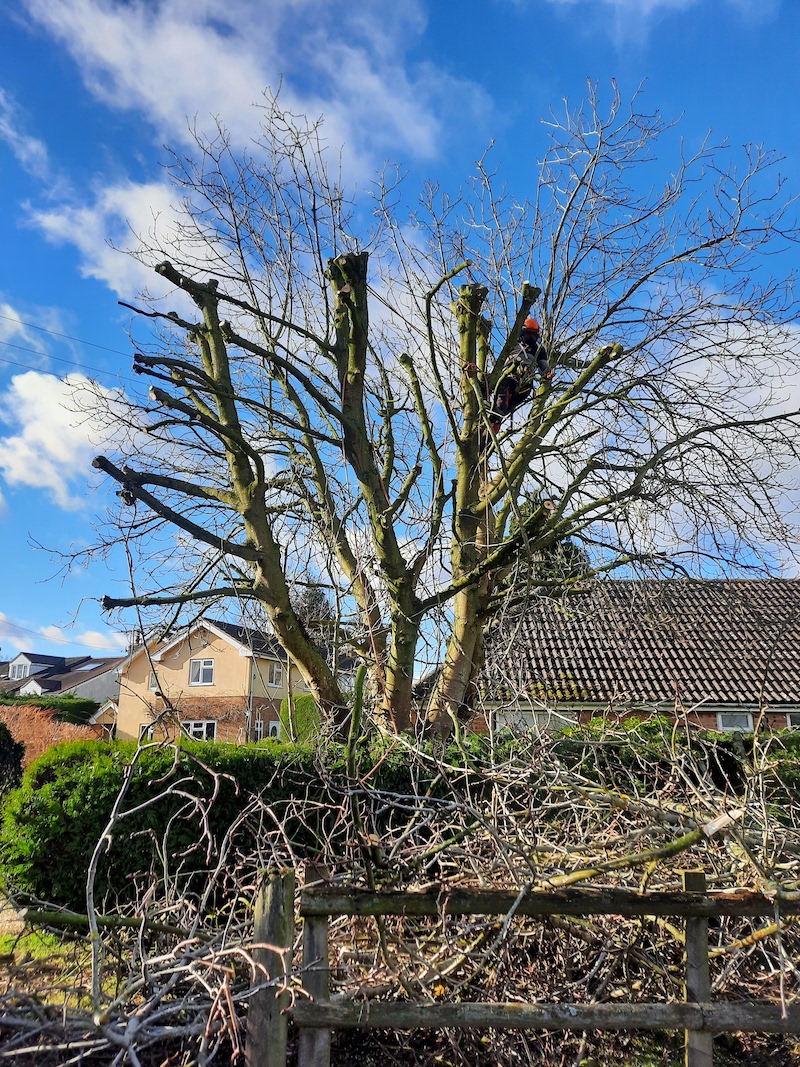
Pruning serves three main purposes. The first is growth management: keeping a tree in proportion with its space, so it does not press against a roof, shade a window or crowd a neighbouring plant. The second is clearance, lifting or reducing overhanging limbs above driveways, footpaths and access routes. The third is structure, encouraging a balanced framework of branches and removing wood that rubs, crosses or is weakly attached.
Removing dead or damaged wood is also part of most pruning jobs. It improves how the tree looks, and it removes branches that could fail in wind or under snow.
When pruning is the right choice
Pruning is often the first option considered when a tree is sound but has outgrown its position, when branches obstruct light or access, or when a young tree needs its shape developed early. If a tree shows signs of decay, cracking or structural weakness, pruning may not be enough, and the assessment will say so. In those cases, a written tree survey can record the tree's condition before any decision is made about removal or further work.
Pruning is also often part of a protective approach for trees that must stay. Where a tree is valued for its landscape, wildlife or history, our conservation tree work explains how cuts are chosen to keep the tree healthy and in place.
What an assessment and proposal involve
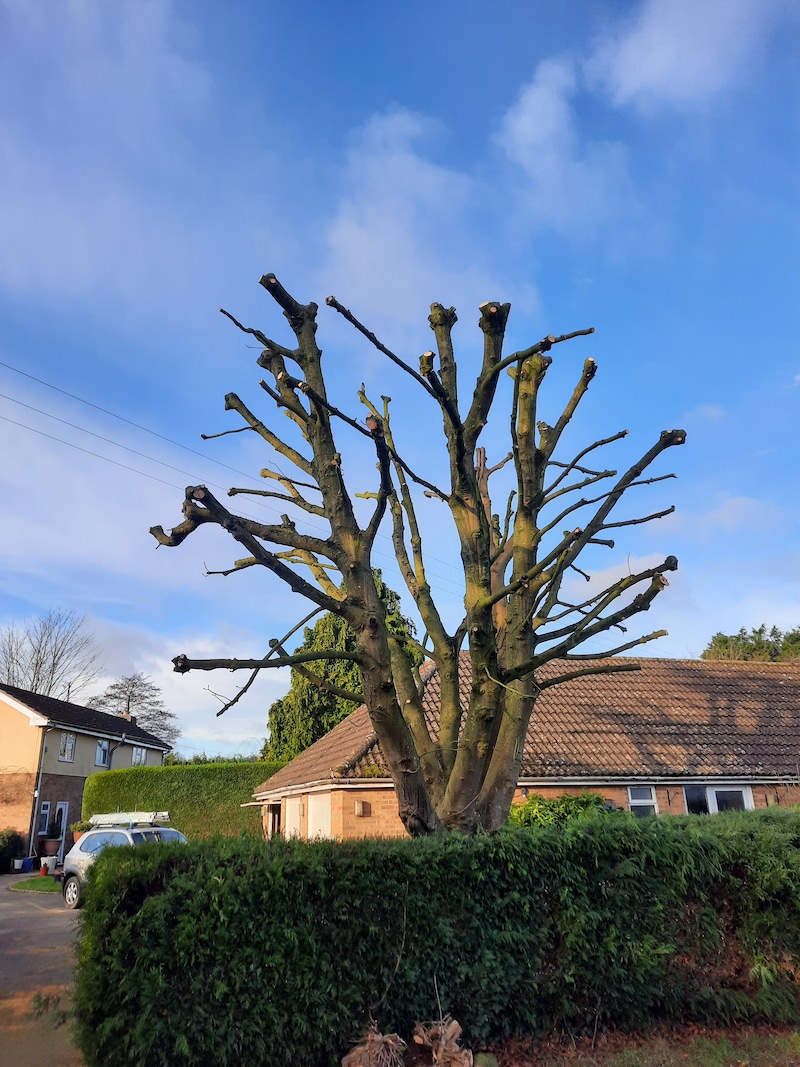
We look at how the tree is growing, where its weight sits, how the branches join the trunk and what the cuts need to achieve. The aim is usually to remove the least that solves the problem, because heavy cutting can stress a tree and encourage weak regrowth.
The proposal should say what will be cut, what will be left and why.
Practical considerations
- Access: the tree's position determines whether work is done from the ground, from a ladder or from elevated equipment.
- Timing: the best season depends on the species and the work. Some work is restricted during the bird nesting season, so timing can matter.
- Nearby structures: roofs, gutters, fences and overhead cables all affect how far branches can be taken back and how they are lowered.
- Site finish: cut branches can be removed, chipped or stacked.
Choosing the right operation
Pruning covers several different operations, and the right one depends on the tree and what you want from it. We explain the method in the proposal, so you know what the finished tree will look like.
What is included and what needs confirming
Usually included
- An assessment of the tree and the reasons for pruning
- Removal of the agreed branches and dead wood
- Safe working methods around the property
Requires confirmation
- Specific pruning operations and their extent
- Removal or chipping of cut material
- Work at height that needs extra equipment
- Permissions where the tree is protected
Questions about tree pruning
How often does a tree need pruning?
It depends on the species, how fast it grows and where it stands. A tree close to a building often needs attention more regularly than one in an open field. The assessment can suggest a sensible interval for your tree.
Will pruning weaken the tree?
Poorly judged pruning can harm a tree, which is why we aim to remove only what is needed. Well-placed cuts support the tree's own recovery and keep the structure balanced.
Is there a best time of year to prune?
Timing depends on the species and the work. Some pruning suits certain seasons better, and some work is restricted during the bird nesting season. We will advise on timing for your tree when we look at it.
Keep your tree in proportion
Tell us which branches are in the way and what the tree is growing towards.